
False ceiling design ideas and cost guide for 2026
A false ceiling is one of the few upgrades that changes how an entire room feels — lighting, proportions, even how "finished" a home looks. Here's what the different designs actually cost in 2026, and which ones suit which rooms.
How much does a false ceiling cost in 2026?
False ceiling work is usually priced for the whole home rather than room by room, since the framing and electrician coordination happen together. Based on current material and labour rates, here's what each tier includes:
Essential
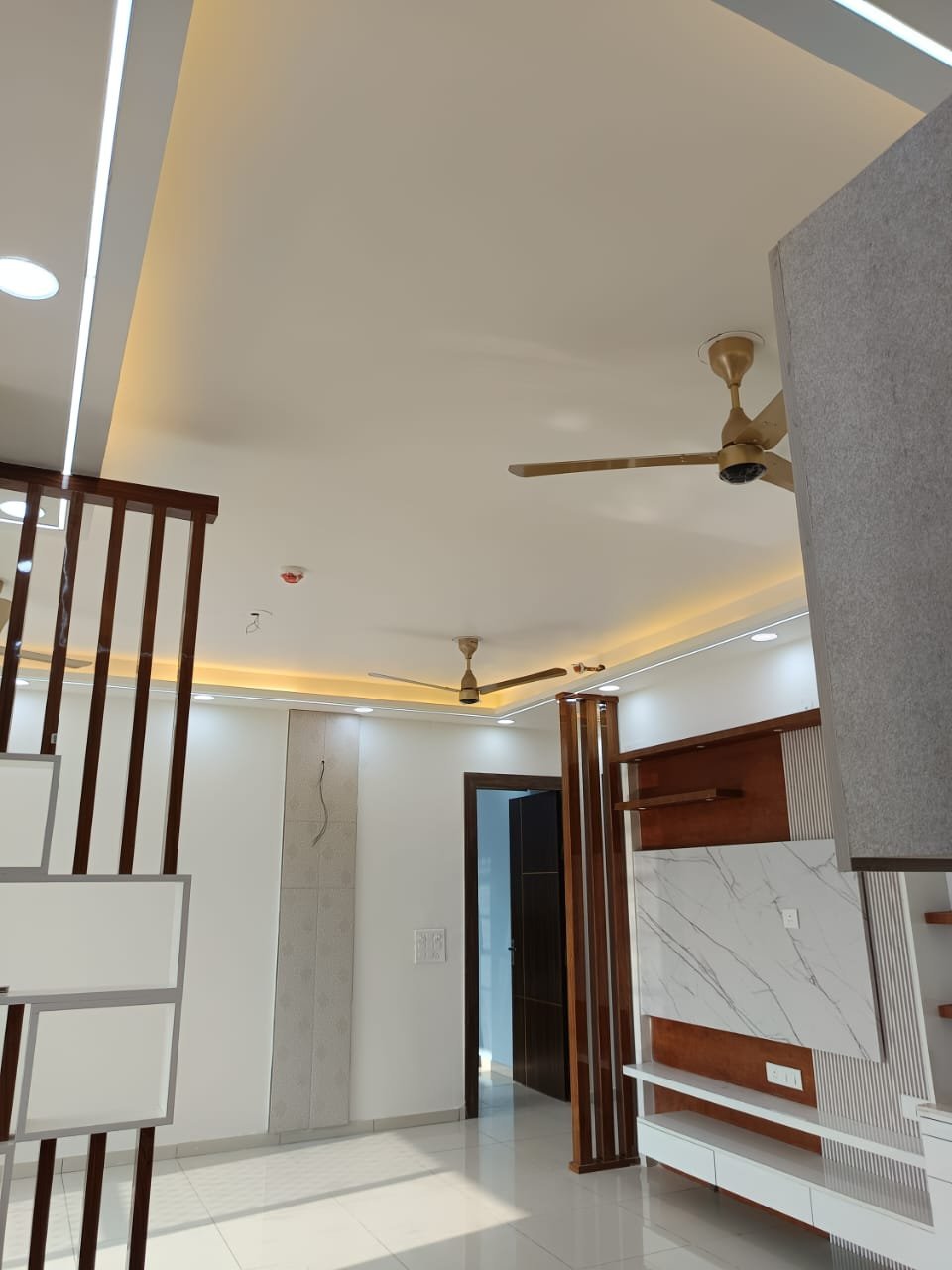
Single-level gypsum board ceiling in the living room and bedrooms, basic perimeter cornice, standard ceiling lights.
Premium
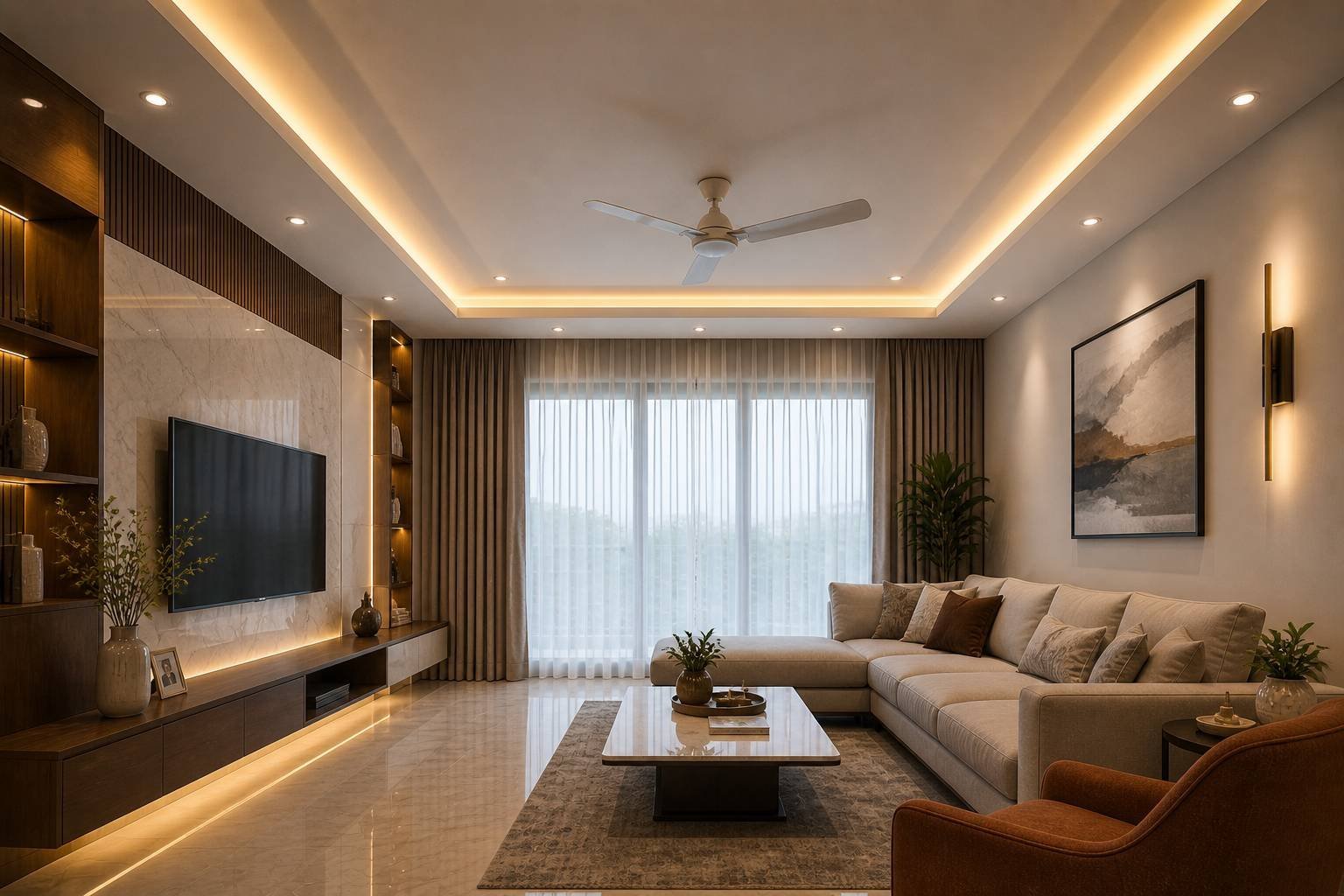
Two-tier design with a cove channel for indirect lighting, spot-light cutouts, and a wood-look or textured accent panel.
Luxury
Multi-layer floating or coffered ceiling, curved POP sections, integrated LED profile lighting, and acoustic detailing for a home theatre or living room.
Actual cost depends on carpet area, ceiling height and how many rooms are covered. Run your own numbers on our interior cost calculator or book a free site visit for a measured quote.
POP vs gypsum board: which should you choose?
This is the first decision every false ceiling conversation comes down to, and the honest answer is: most homes use both.
- Gypsum board is lightweight, installs quickly with a metal frame, and is easy to repair or re-cut later if you need to add a light point. It's the default choice for straight-line, tiered designs.
- POP (Plaster of Paris) is applied wet over a mesh frame and can be moulded into curves, cornices and decorative motifs that gypsum boards can't easily replicate. It takes longer to cure and finish but gives a more sculptural result.
- Most 2026 designs we execute use a gypsum board base for the main ceiling plane, with POP reserved for a single curved or coffered feature section — the best of both in terms of cost and finish.
False ceiling design trends for 2026
- Cove and perimeter lighting. A recessed channel around the room's edge that washes light upward — the single most requested detail this year, since it reads as ambient light rather than a bright overhead source.
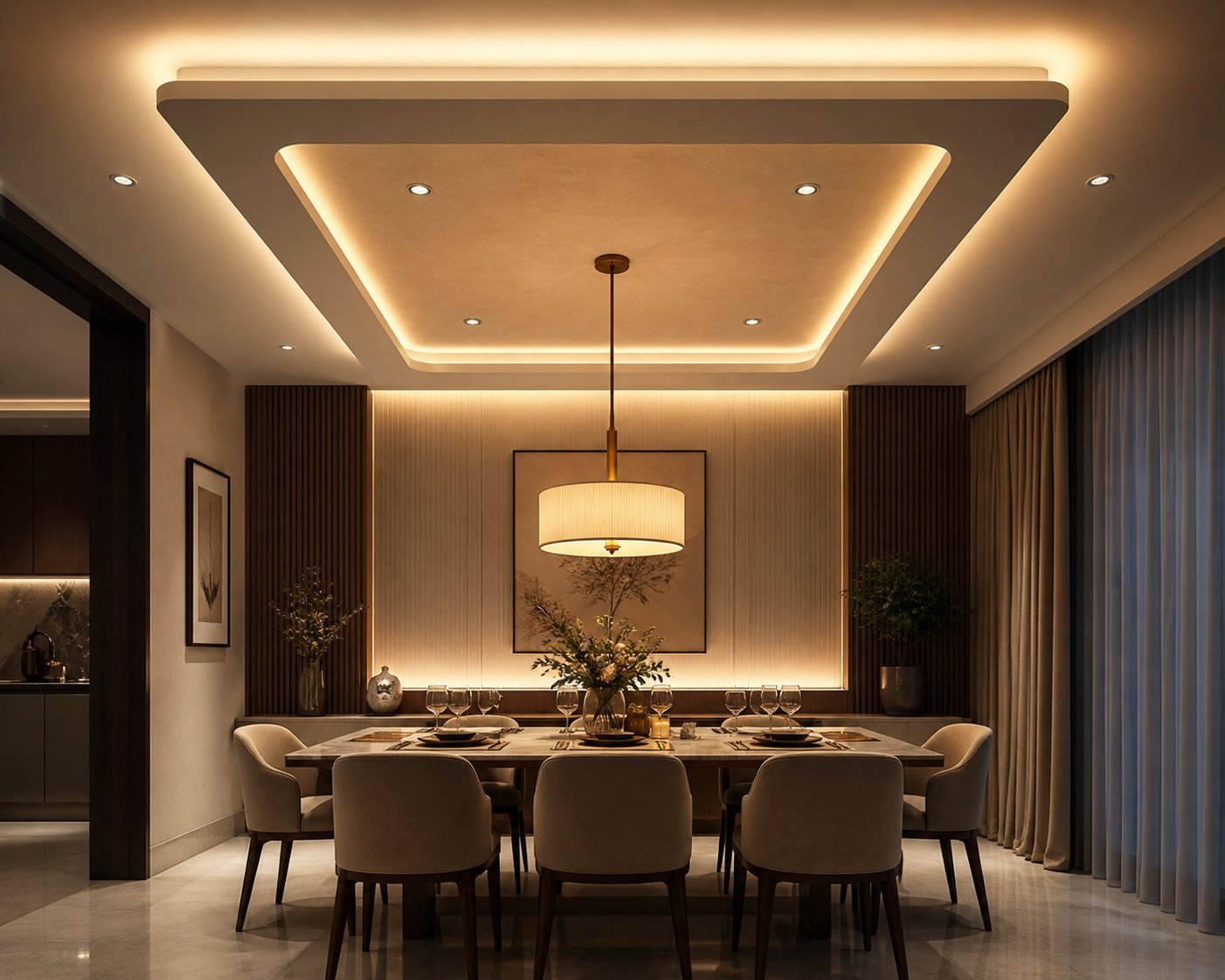
- Floating ceiling panels. A rectangular panel that appears to "float" a few inches below the main ceiling, backlit around its edge — works especially well over a dining table or living room seating cluster.
- Wood-look and textured panels. Warm wood-grain laminate or fluted panel inserts within the ceiling design, echoing the same "warm minimalism" trend showing up in wall finishes this year.
- Minimal single-step designs. Not every room needs a multi-tier ceiling — a single, low-profile step with clean cornice lighting is increasingly preferred for bedrooms, where a busy ceiling competes with sleep.
- Acoustic ceiling sections. Perforated or fabric-wrapped panels for home theatre or work-from-home rooms, which double as sound dampening.
Which design suits which room
- Living room / hall: Multi-tier or coffered designs with cove lighting handle the room's scale well and give a defined "TV wall zone" versus the rest of the seating area.
- Bedroom: Keep it simple — a single-step perimeter design with warm, dimmable cove lighting supports rest rather than drawing the eye upward.
- Dining area: A floating rectangular panel directly over the table, matched to the table's footprint, anchors the space visually.
- Kitchen: A false ceiling is optional here; if used, keep it flush and simple to avoid interfering with exhaust and chimney ducting.
- Pooja / prayer room: A shallow domed or stepped POP design with warm backlighting is a popular way to visually mark this space as distinct from the rest of the home.
Frequently asked questions
How much does a false ceiling cost in 2026? +
Is POP or gypsum board better for a false ceiling? +
Does a false ceiling make a room feel smaller? +
How long does false ceiling installation take? +
Planning a false ceiling for your home?
Get an instant cost range, or book a free site visit for a design tailored to your ceiling height and layout.