
Vastu tips for home interiors in 2026
Vastu remains one of the most searched topics among homeowners planning an interior — and one of the most misunderstood. Most concerns can be addressed at the interior design stage, without breaking a single wall. Here's a practical, room-by-room guide.
Why Vastu still matters to homeowners in 2026
Even in thoroughly modern homes, Vastu compliance continues to influence buying decisions, resale value and day-to-day comfort for a large share of homeowners in Delhi NCR. The good news is that very few Vastu concerns require structural changes — most can be resolved through furniture placement, colour, mirror positioning and how a room is zoned, all of which sit squarely within interior design rather than construction.
Main door and entryway
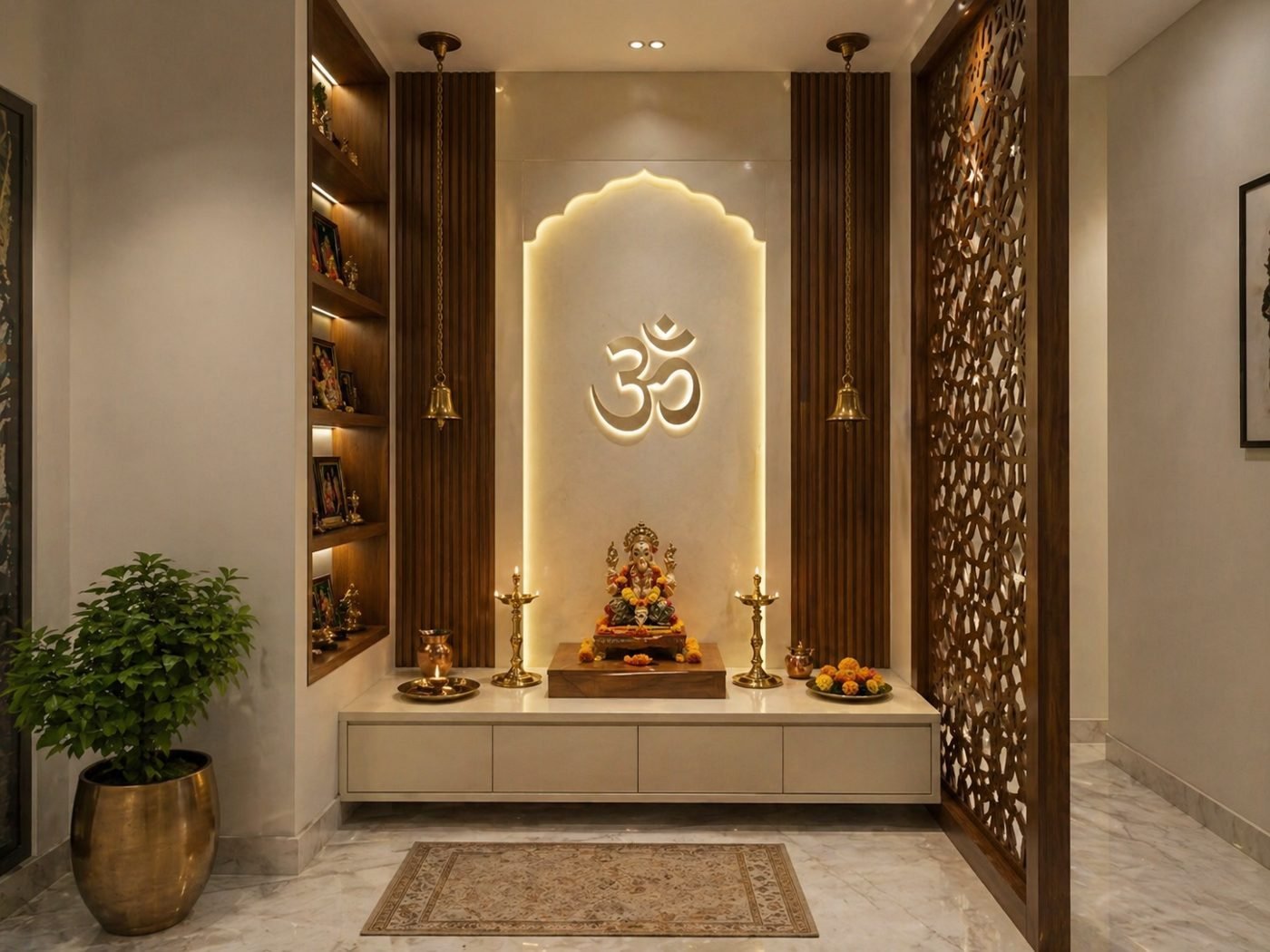
- The main door is considered the primary entry point for energy into the home, and is ideally placed facing north, east or north-east where the building layout allows it.
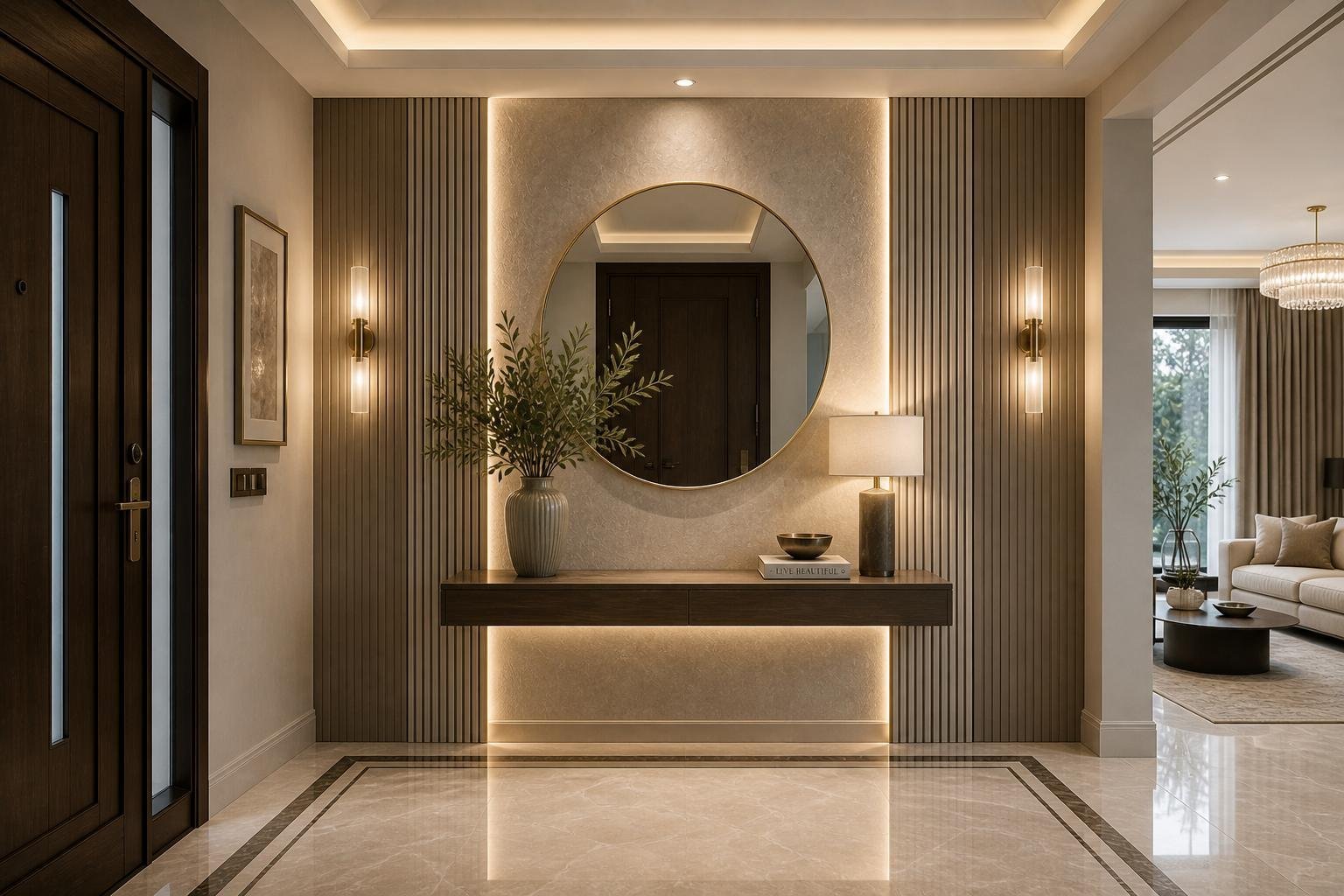
- Keep the entryway well lit, uncluttered and free of shoe racks or bins directly opposite the door — a console table with a mirror (placed so it doesn't directly reflect the door) is a common, design-friendly fix.
- A threshold or subtle flooring change at the entry is often used to mark a clear transition into the home.
Pooja room and prayer corner
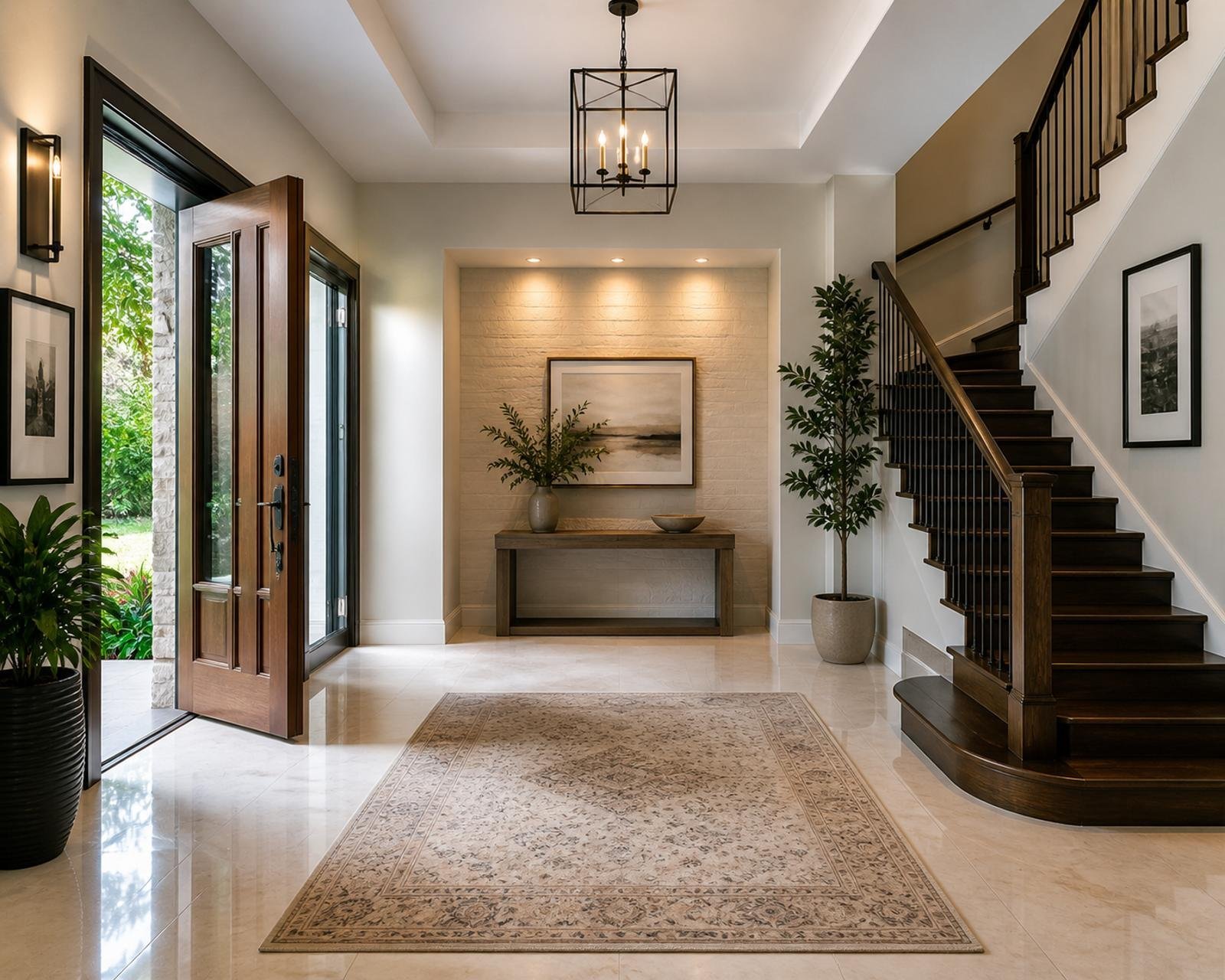
The pooja room is usually the single most-asked-about space in any Vastu conversation. The north-east corner of the home is traditionally considered the most favourable, since it's associated with spiritual energy and typically receives gentle early morning light.
- Where a dedicated room isn't possible, a compact wall-mounted pooja unit positioned in the north-east corner of a living room or kitchen achieves the same intent.
- Idols or images are typically placed facing west or east, so the person praying faces east or north.
- Avoid placing the pooja unit directly under a staircase or attached to a bathroom wall, and keep the space visually distinct with warm lighting and a shallow domed or arched ceiling detail.
Kitchen placement
- The south-east corner of the home is considered the most favourable kitchen location, associated with the fire element.
- Where the kitchen's location is fixed by the building layout, positioning the stove itself so the cook faces east while cooking is the most common interior-level adjustment.
- Keep the stove and sink on separate counters or walls rather than directly adjacent, since fire and water elements are traditionally kept apart.
Bedroom and sleeping direction
- Sleeping with the head toward the south or south-west is generally recommended, while sleeping with the head toward the north is typically advised against.
- The master bedroom is usually placed in the south-west of the home for stability, with children's or guest bedrooms toward the north-west or west.
- Avoid positioning a bed directly under a ceiling beam or facing a mirror — if the room's layout makes this unavoidable, a false ceiling detail or a mirror with a cover/door resolves it without moving walls.
Living room and general layout
- The north or north-east zone of the living room is considered favourable for seating meant for guests, with the homeowner's usual seating facing north or east.
- Heavy furniture is traditionally placed toward the south or west walls, keeping the north-east lighter and more open.
- Indoor plants are welcome in the east or north but are generally avoided in the south-east, which is associated with fire.
What if my home's layout doesn't allow for any of this?
Most apartments in Delhi NCR are built to a fixed structural plan, and very few buyers have the option to rotate a kitchen or move a main door. In practice, an experienced interior designer resolves the majority of Vastu concerns through zoning, colour, mirror placement, lighting direction and furniture orientation — all reversible, interior-level decisions rather than construction. If Vastu compliance matters to you, it's worth raising it at the very first design consultation, before layouts and cabinetry are finalised.
Frequently asked questions
Which direction is best for a pooja room according to Vastu? +
Can I still follow Vastu in a modern apartment with a fixed layout? +
What is the ideal direction to sleep according to Vastu? +
Where should the kitchen ideally be placed in a home? +
This guide reflects commonly followed Vastu conventions and is intended as general design guidance, not religious or astrological advice. Practices vary by tradition and region — consult a Vastu or astrological expert for guidance specific to your beliefs.
Planning a Vastu-friendly home?
Tell us your priorities at the first consultation and we'll design around them from day one.