
Wall paint colour combinations for 2026: a room-by-room guide
Paint is the fastest, cheapest way to change how a home feels — and 2026's palette has moved firmly away from the cool, flat greys of the last few years. Here's what's actually being chosen, room by room, and what it costs.
The big shift: warm minimalism over cool grey
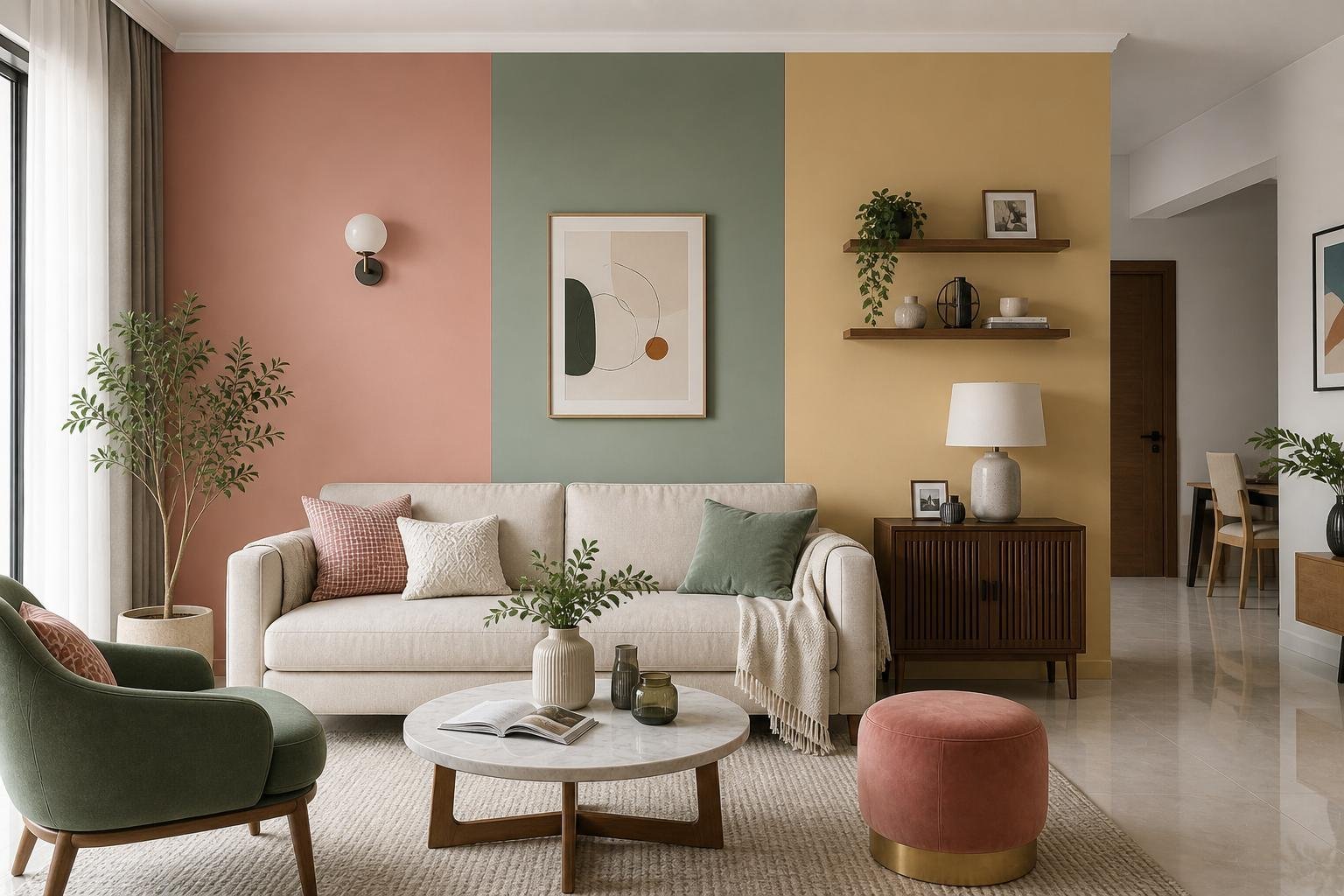
For years, "modern" meant grey — cool, flat, slightly clinical. That's fading. The 2026 palette is built around warm minimalism: beige, sand, soft browns, muted greys with a warm undertone, and earthy greens. Terracotta and rust tones are showing up in bedrooms and dining rooms as full immersive colour rather than a single accent wall. The common thread across all of it is warmth — colours that feel lived-in rather than showroom-styled.
How much does repainting cost in 2026?
Essential
Standard emulsion in two coats, single colour per room, basic surface prep and crack filling.
Premium
Washable emulsion, multi-colour or colour-blocked walls, one textured or accent finish, full surface levelling.
Luxury
Premium low-VOC paint, decorative textures like limewash or microcement on feature walls, full stencil or mural detailing.
Figures are for a full 2-3 BHK home including ceilings; get a number specific to your home's area on our interior cost calculator.
Living room and hall palettes
- Sage and warm white. A muted green paired with an off-white ceiling and trim — calm, versatile, works with both wood and marble flooring.
- Terracotta and cream. A fully painted terracotta wall behind the sofa, balanced with cream on the remaining walls, brings warmth without overwhelming a bright room.
- Colour-blocked zones. Two or three muted tones (sage, mustard, dusty rose) used on different wall segments instead of one flat accent wall — popular for open-plan living-dining layouts to visually separate zones.
Bedroom palettes
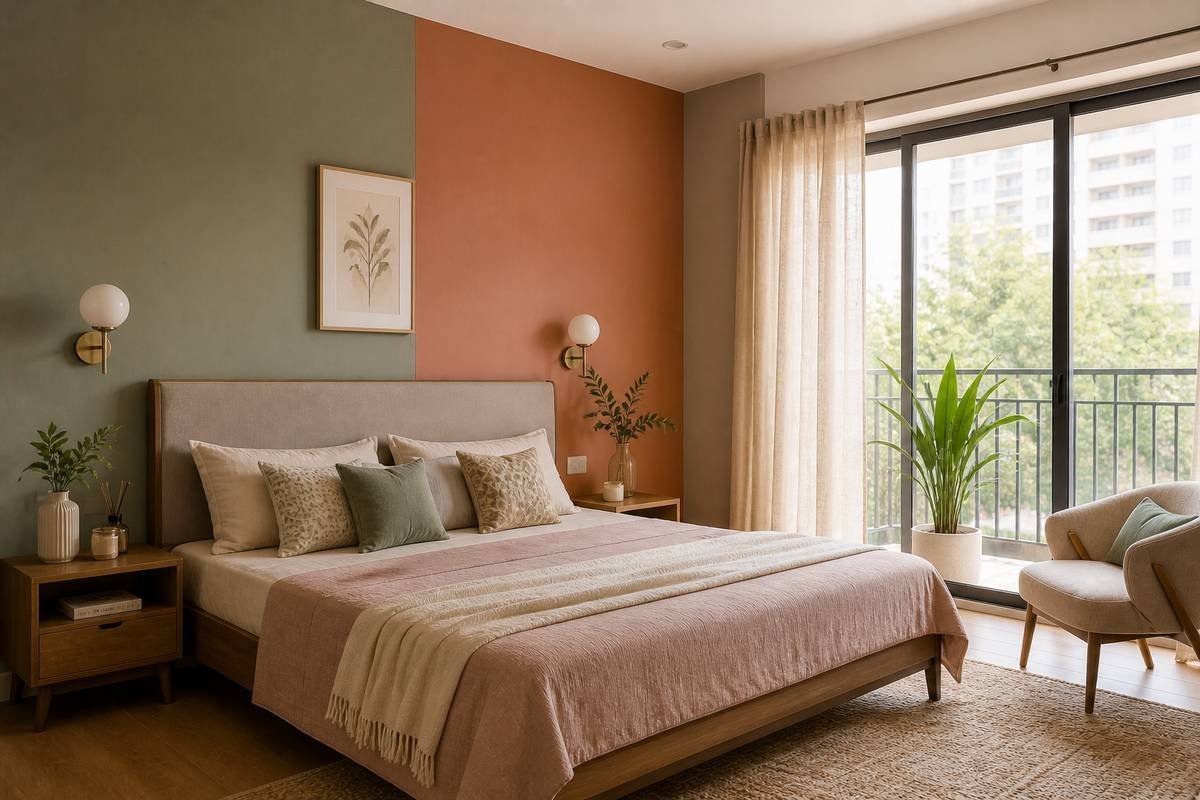
- Dusty rose or clay. Soft, warm pinks and clay tones are replacing cooler lavenders and greys for a calmer, more restful bedroom.
- Deep, immersive tones. Instead of a light room with one dark accent wall, entire bedrooms painted in a single rich tone — espresso brown, deep green, muted navy — for a cocoon-like feel, balanced with warm lighting.
- Soft neutrals with a warm undertone. Sand and putty tones remain a safe, resale-friendly choice for a master bedroom that still feels current.
Kids room and study palettes
- Muted, dusty versions of playful colours (soft blue, sage, blush) age better than bright primary colours as children grow older.
- Washable satin or semi-gloss finishes are worth the small extra cost in a kids room — walls get marked, and matte finishes are harder to clean.
- A single feature wall with a mural, wallpaper panel or geometric paint pattern keeps the room playful without repainting the whole room later.
Finish types: matte, satin, texture
- Matte: Hides surface imperfections well; best for bedrooms and ceilings where a soft, non-reflective look is preferred.
- Satin / washable: Slightly more reflective and far easier to wipe clean — the right choice for kitchens, kids rooms, hallways and any high-traffic wall.
- Textured finishes: Limewash and microcement add a tactile, hand-finished quality that flat paint can't replicate, and are increasingly used on a single feature wall rather than a full room, given the higher cost and skilled application needed.
Choosing colours that actually work in your home
- Test a sample patch on the actual wall and view it at different times of day — the same colour reads very differently under morning daylight versus evening artificial light.
- North-facing rooms get cooler, flatter light and generally suit warmer paint tones to balance it; south-facing rooms can carry cooler tones better.
- Keep ceilings a shade lighter than the walls in most rooms — it keeps the room feeling taller even with a false ceiling in place.
- If you're planning to sell in the next few years, lean toward warm neutrals in shared spaces and save bolder immersive colour for the bedroom, where it affects resale the least.
Frequently asked questions
What is the most popular wall paint colour trend for 2026? +
How much does painting a full home cost in 2026? +
Are accent walls still in style in 2026? +
Matte or satin finish: which should I choose? +
Not sure which palette suits your home?
Book a free consultation — our designers will bring sample boards matched to your lighting and furniture.